

The wind phone was developed in partnership with United General District 304’s grief support program Rooted: Grieving & Growing Together Children’s Bereavement Services, Skagit Parks and Recreation, the Port of Skagit, and Skagit Trail Builders.
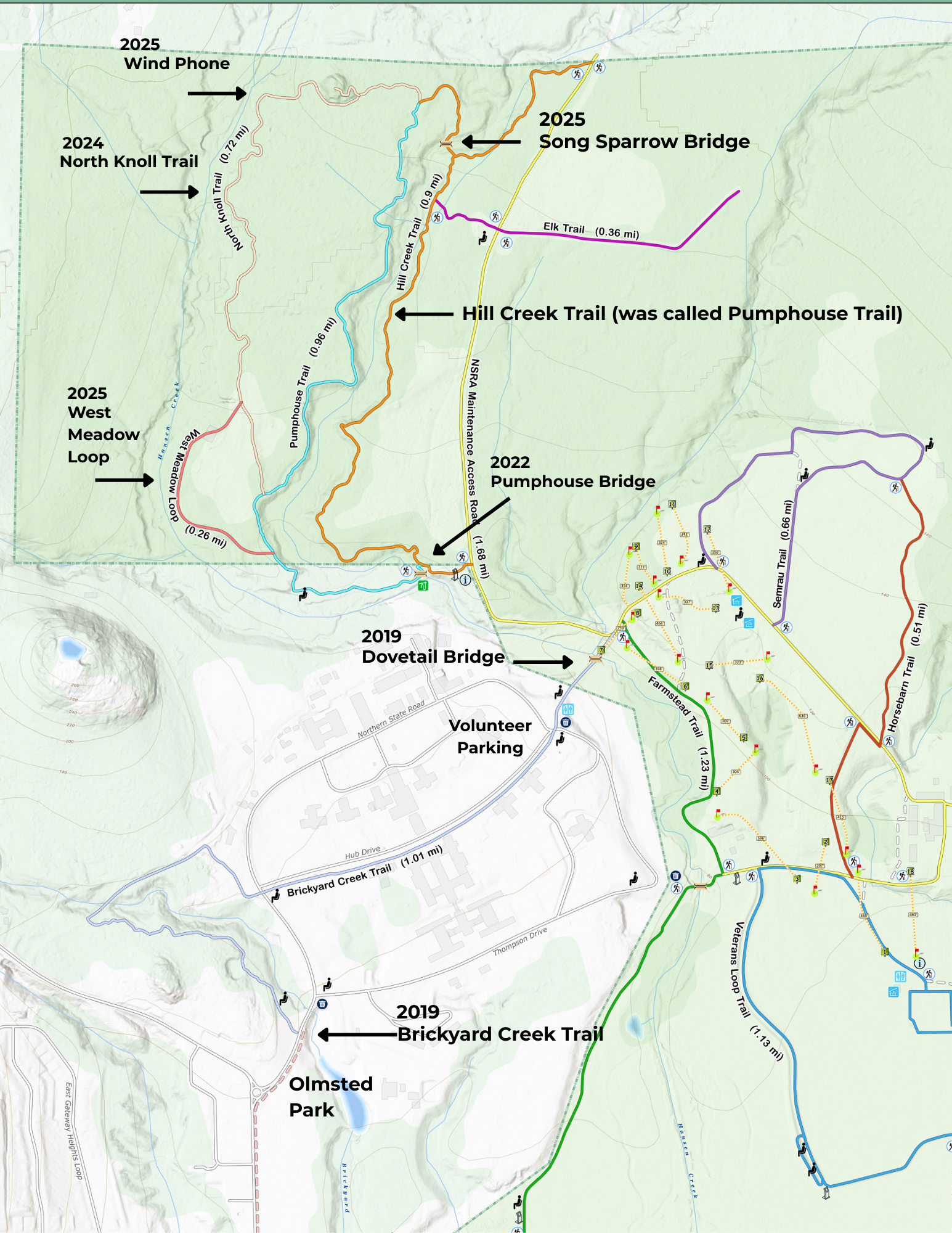
Located just 1/4 mile west of the North Knoll, it offers a peaceful setting for the living to release their grief, reminisce, and connect to loved ones who are gone.
September 20, 2025 update
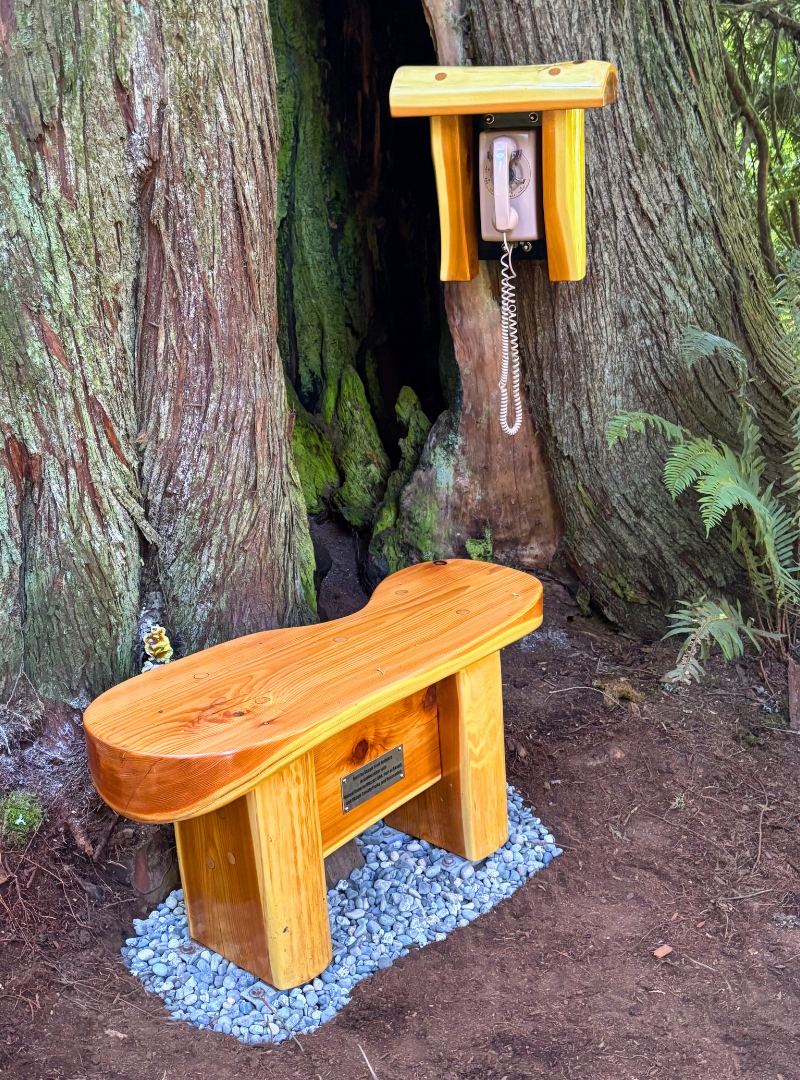
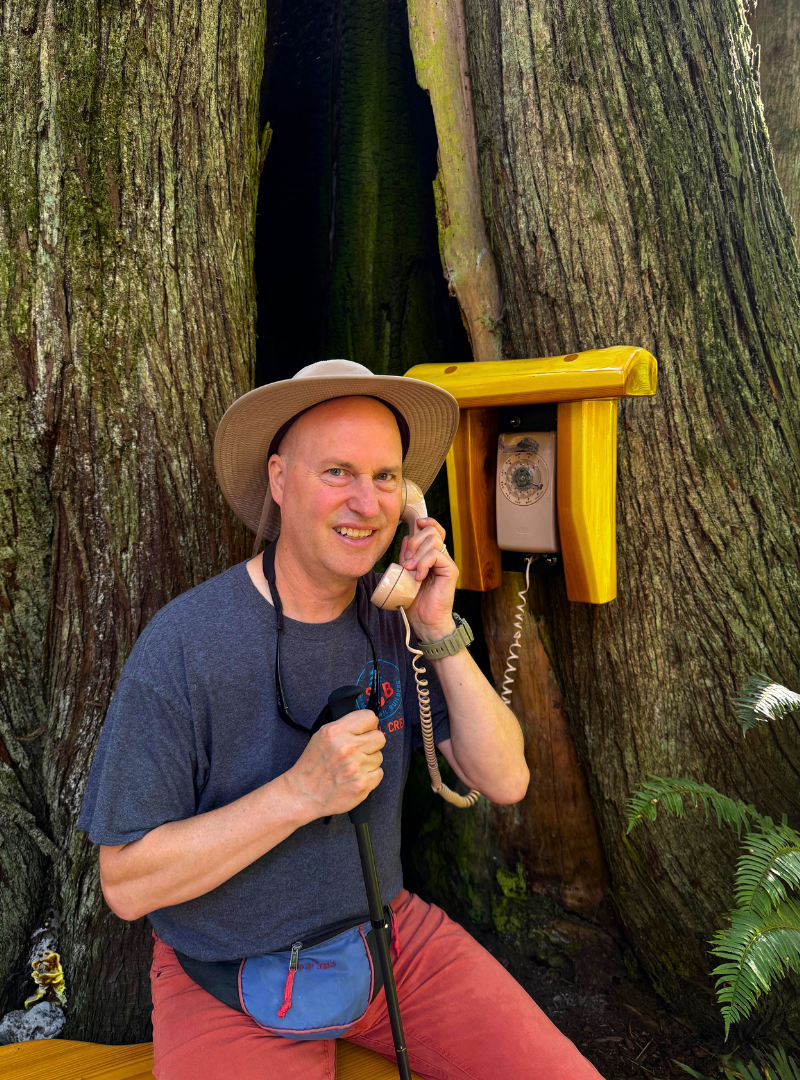
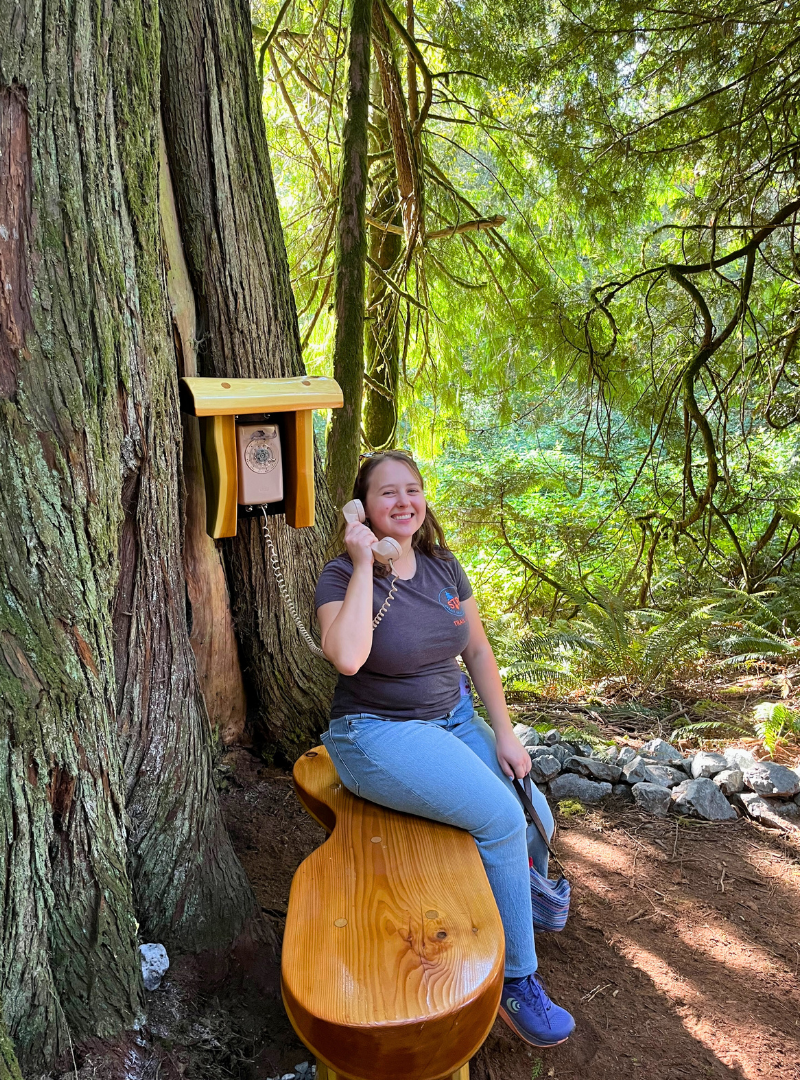
The Wind Phone is Complete
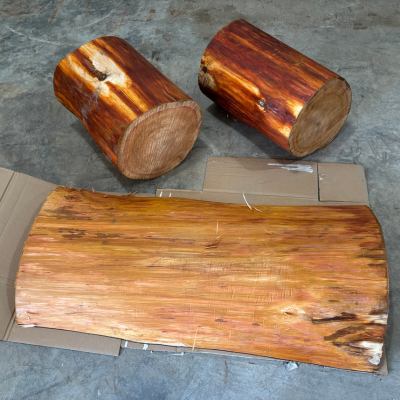
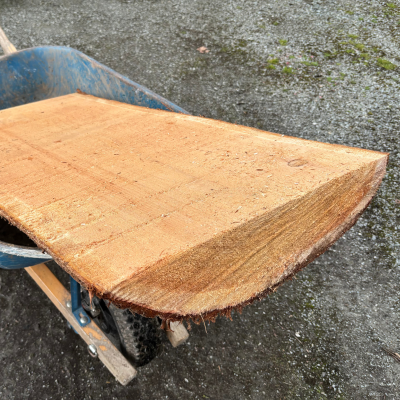
The bench and wind phone cover were created using windfall cedar that came down in the park during last winter’s storms. The Port of Skagit SWIFT Center provided the raw slab for the bench seat. Our Executive Director and a skilled carpenter, Jim “JT” Taylor, cut the wood for the legs from a downed tree near Song Sparrow Bridge.
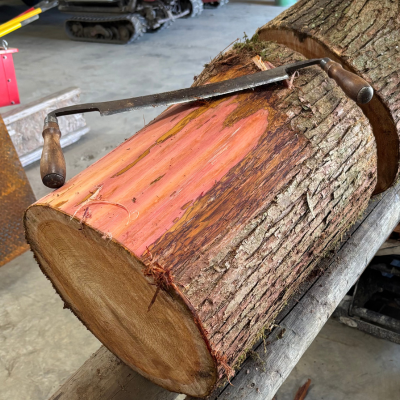
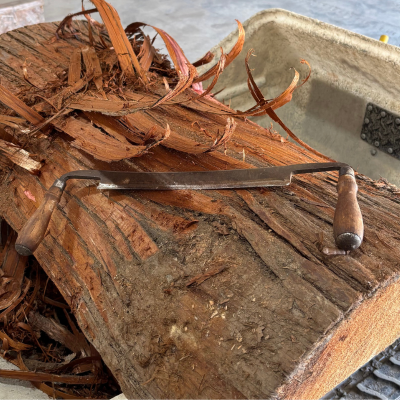
JT used his grandpa’s old draw knife (over 100 years old) to strip the bark. It then took nearly six months for the wood to dry before it could be worked with.
JT shaped and sanded the wood, filling in the cracks with epoxy to protect against water intrusion. Many coats of marine-grade varnish were applied to seal and protect the surface of the wood.
Jim Barborinas, owner of Urban Forest Nursery, provided a free consultation to properly prepare and mount the phone to the tree to minimize damage and allow the tree to continue to grow. We also took care to protect the roots while digging and placing the cement for the bench.
Beth Ruth from United General District 304 (our program partner) donated the rotary phone that had belonged to her grandmother.
Skagit County Parks and Recreation provided the signs and cement. Additional funding for materials came from United General District 304 and donations from our local community.
The installation of the Wind Phone on North Knoll Trail is in alignment with the park’s overall art and interpretive signage project: Healing.
While details of the project are funding dependent, the initial planning effort is being led by Skagit County Parks and Recreation Director Brian Adams in consultation with Studio Understory and a community of local historians, artists, and subject matter experts.
Learn more about the history of the Wind Phone

September 3, 2025 update
The bench is in place, the sign is mounted and the brackets are in place for the phone. JT has built a cover for the phone that echos the style of the bench, made from the same slab of downfall cedar. The last step will be for the varnish to cure on the phone box.

August 27, 2025 update
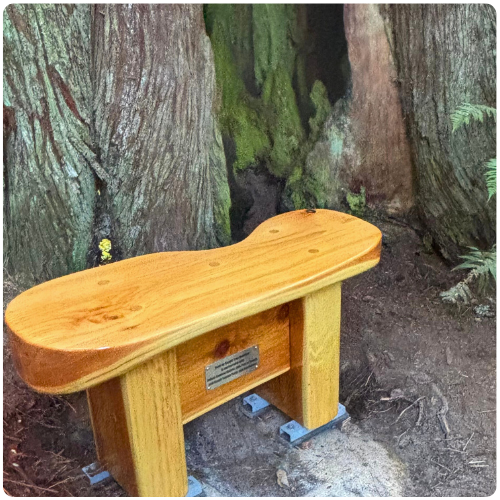
Made from two windfall cedars that came down in last year’s winter storms, it took all summer for the freshly milled wood to dry and cure. Last week, JT assembled the bench pieces and performed a dry fit at the site, measuring for drilling the mounts.
Next steps: filling the cracks with epoxy and applying the varnish. While the varnish is setting, JT will build a protective box for the phone and mount the sign.
This bench is being lovingly built to last for years. Our plan is to install the bench and phone before the September 19 Ribbon Cutting at Song Sparrow Bridge..



April 7 update
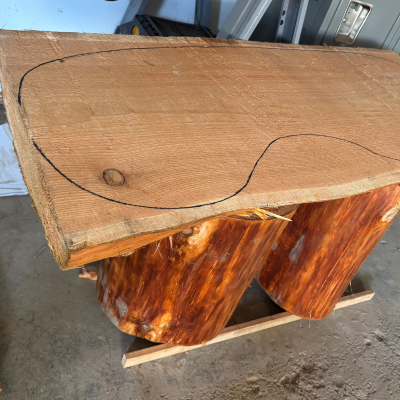
The Port of Skagit donated a slab of cedar and we trimmed logs from tree fall to build the bench.
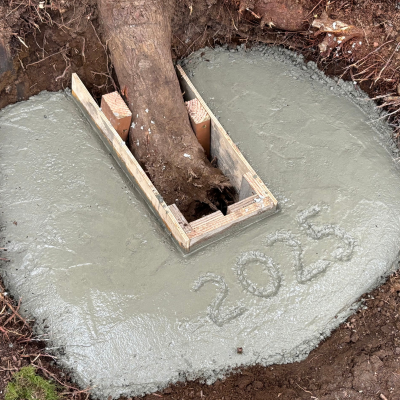
JT has put in many hours peeling the bark off the logs and pouring a concrete base. The wood is drying and the concrete is curing!
We are shaping the bench to match the curve of the tree and comfortably seat two people.
Next steps…shaping the bench and letting it cure! We are also building a protective box for the phone.
March 26, 2025
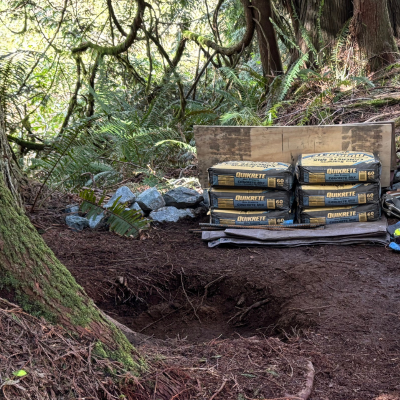
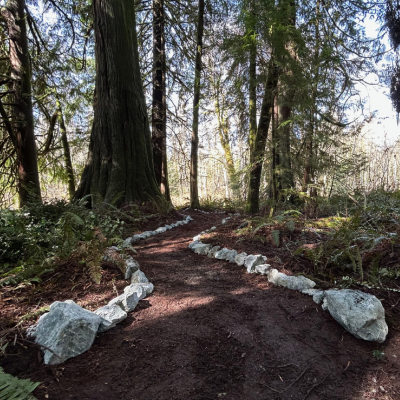
Trail volunteers Jenny, Jim, and JoMarie cleared the site. This included removing invasive holly, clearing dead-fall, transplanting ferns, and defining the perimeter with rock.
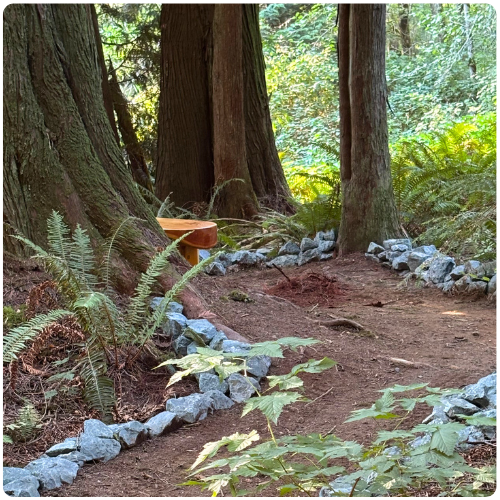
Unlike our hard-packed trails which are topped with rock sand, we’ve chosen to surface this site with cedar duff. Cedar duff looks like dark soil, but inhibits the growth of many weeds. It is natural to the landscape – soft on the eyes and under foot.
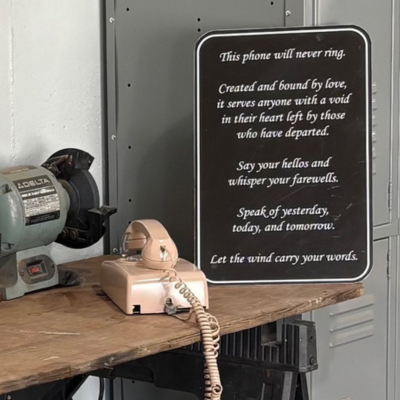
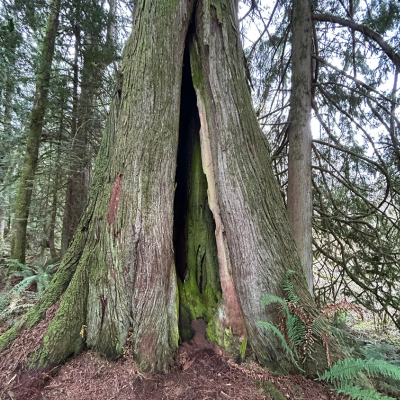
The wind phone will be located at the hollow base of a old-growth cedar tree. It will consist of a beautiful live edge bench, a vintage rotary phone, and a sign with a view of Hansen Creek.
We have dug holes for concrete at the base of the tree to anchor the bench, being careful not to damage the roots of the grand tree.
Next steps will include pouring and curing the concrete and building the bench. The Port of Skagit has generously offered a freshly milled cedar slab.
We are building a box to protect the phone from rain. The phone was donated by our friend Beth Ruth from United General District 304.
United General and Skagit County Parks and Recreation provided the sign.
To learn more about the purpose and history of the wind phone, scroll down.
Wind phones help the bereaved deal with death, loss and grief − a clinical social worker explains the vital role of the old-fashioned rotary phone
Taryn Lindhorst, Professor of Social Work, University of Washington
This article is republished from The Conversation under a Creative Commons license. Read the original article.

My mother died in my home in hospice in 2020, on the day my state of Washington went into COVID-19 lockdown. Her body was taken away, but none of the usual touchstones for grief were available to our family. There was no funeral or supportive gathering, no deliveries of food and no hugs. For months afterward, as the nationwide lockdown continued, thousands of other families like mine saw these death rituals – society’s social supports for grieving – stripped away.
As a clinical social worker and health scholar with 40 years of experience in end-of-life care and bereavement, I knew that I needed some way to tend to my grief for my mother. While in lockdown, I began looking for resources to help me. Then I heard about the wind phone.
What is a wind phone?
At its simplest, a wind phone is a rotary or push-button phone located in a secluded spot in nature, usually within a booth-type structure and often next to a chair or bench. The phone line is disconnected.
People use the wind phone to “call” and have a one-way conversation with deceased loved ones. Here they can say the things left unsaid. Wind phones offer a setting for the person to tell the story of their grief, to reminiscence and to continue to connect to the person who is gone. For many, it is a deeply moving, life-affirming experience.
About 200 wind phones are scattered throughout the United States. Wind phones are open to the public, free of charge and usually found in parks, along walking trails and on church grounds. Typically, they are built by those who want to honor a lost loved one.
The wind phone began in Japan in 2010, when Itaru Sasaki, a garden designer, built a phone booth in his yard so he could “talk” with a deceased relative. Months later, the Fukushima earthquake and tsunami hit; in a matter of minutes, more than 20,000 people died.
Sasaki opened the phone booth to his neighbors, who urgently needed a place to express their grief. Word spread, and soon people came on pilgrimage from around Japan to speak through the “phone of the wind” to those they loved.
Since then, wind phones have spread throughout the world. https://www.youtube.com/embed/HGupzRrP824?wmode=transparent&start=0 The story of the first wind phone.
Do wind phones work?
Grief is a universal human experience; it affects us psychologically, socially, spiritually and even biologically. Some of our first rituals as humans are those surrounding death, with some practices more than 10,000 years old, such as using flowers in burial ceremonies and positioning the deceased as if asleep, with a pillow under their head.
Yet there is still no clear guidance on how people should deal with grief. But the power of speaking to rather than about the deceased has long been at the root of many grief interventions worldwide, including Gestalt therapy, which encourages patients to role play or reenact life experiences. A common approach taken by a Gestalt therapist is letting the client speak directly to an empty chair while imagining the person they’ve lost is sitting there. A similar approach is to write a letter to the deceased and then read it out loud.
What these techniques and the wind phone have in common is the use of a conversational approach that allows connection, reflection and the safe release of strong emotions. By their very nature, both speaking and writing encourage direct emotional expression; this helps release physical and psychological tension in the body.
What’s more, the spontaneity of saying it out loud can reveal subconscious insights. That’s because talking can outpace internal censorship of painful thoughts.
Using a wind phone can elicit strong feelings, and not all are positive ones. They may elicit tears, anger, guilt and shame. Some conversations become confessional. The wind phone setting provides a way to contain feelings that the bereaved worry might overwhelm them.
Research is needed
In American culture, it’s common to talk about obtaining closure for the loss of a loved one – to get over it and move on. It is true that the initial period of deep sadness and trauma typically fades over time, but some grief can persist across a lifetime. In the weeks, months and years after the death, feelings can erupt unexpectedly in “grief attacks,” or as sudden waves of emotion, triggered by a memory, a smell, an event or a thought.
To my knowledge, no research has been conducted on wind phones, so it’s not yet possible to say from a scientific perspective whether they definitively help a person cope with their grief. This is not surprising; studies on grief have not received as much research attention as mental health disorders, such as depression or anxiety, although grief can lead to either of these disorders.
Yet the rapid spread of wind phones over the past decade suggests, if nothing else, that there is an almost universal need for those in mourning to engage with grief. And for the thousands who have tried it, there is comfort to be found through a one-way call.
 Skagit Trail Builders

You must be logged in to post a comment.